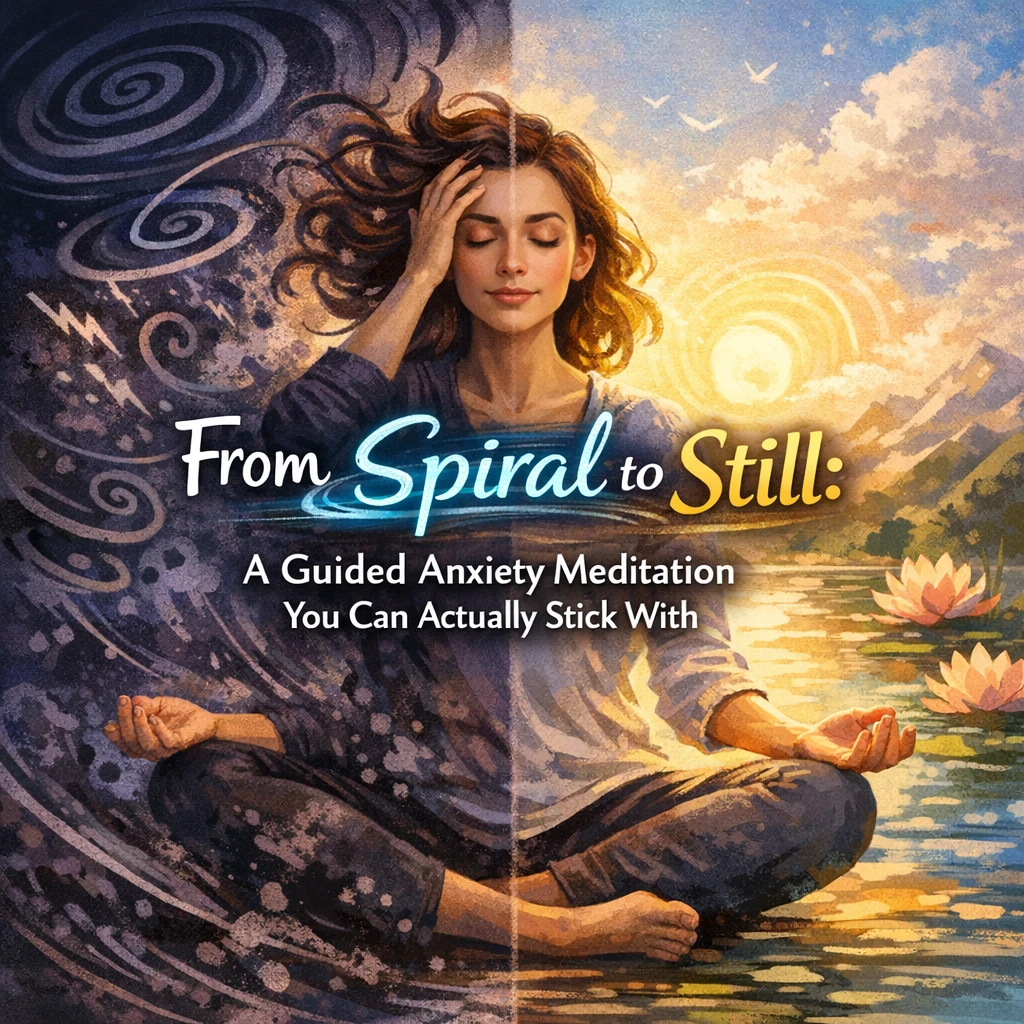
Anxiety has a way of pulling us into its whirlwind—racing thoughts, tense muscles, and a heart that won’t slow down. But what if you could step out of that spiral and into stillness? Meditation can be a powerful tool, but let’s be honest: sticking with it isn’t always easy. This guided approach is designed to meet you where you are, making meditation feel less like a chore and more like a refuge.
Why Most Anxiety Meditations Fail (And How This One’s Different)
Many people abandon meditation because:
- It feels too rigid. Sitting still for 20 minutes? Impossible when your mind is buzzing.
- The guidance doesn’t resonate. Generic scripts can feel disconnected from real anxiety.
- Expectations are too high. If you’re waiting for instant zen, frustration follows.
This meditation meets anxiety where it lives—gentle, adaptable, and grounded in the present moment. No perfection required.
The Anatomy of an Anxiety-Friendly Meditation
1. Start with Permission
Anxiety often comes with self-judgment (“I shouldn’t feel this way”). Begin by giving yourself permission:
- To feel exactly as you do.
- To pause without fixing anything.
Try this: Whisper, “It’s okay. I’m here with you.” (Yes, out loud.)
2. Ground in the Body
Anxiety lives in the mind, but the body is your anchor.
- Notice tension: Scan from head to toe. Where is it tight? Don’t force relaxation—just observe.
- Use touch: Press your palms together or feel your feet on the floor. Physical feedback quiets mental noise.
3. Breathe With Anxiety (Not Against It)
Forget “calm breathing” if it feels forced. Instead:
- Inhale deeply, then exhale longer (even a 1-second extension signals safety to the nervous system).
- Imagine breathing into the tightest part of your body.
4. Label Thoughts Like Clouds
Trying to stop thoughts fuels anxiety. Instead:
- Picture each worry as a cloud drifting by. Name it (“planning,” “fear,” “what-if”) and let it pass.
- If you get stuck, gently return to your breath.
5. End with a Kindness Ritual
Anxiety shrinks when met with compassion. Close by:
- Placing a hand on your heart and saying, “This is hard, but I’m doing my best.”
- Visualizing warmth spreading through your chest.
How to Make It Stick
Micro-Moments Over Marathon Sessions
- Start with 2–3 minutes. Consistency trumps duration.
- Pair it with a habit you already have (e.g., after brushing your teeth).
Embrace the “Messy Middle”
Some days, your mind will wander every 5 seconds. That’s not failure—it’s practice.
Adjust as Needed
- Try walking meditation if sitting still feels unbearable.
- Use whispered mantras like “I am safe” or “This will pass.”
The Quiet Shift: What to Expect Over Time
This isn’t about erasing anxiety—it’s about changing your relationship with it. With practice, you’ll notice:
- Small pauses between trigger and reaction.
- Less identification with anxious thoughts (“I am anxious” vs. “I’m feeling anxious”).
- More moments of stillness, even amid chaos.
Your Invitation to Stillness
Tonight, before bed, try this: Sit somewhere quiet, set a timer for 3 minutes, and follow the steps above. No grand expectations—just curiosity. The spiral may not vanish, but you’ll have a lifeline to pull yourself back.
Stillness isn’t the absence of noise; it’s the space you create within it.