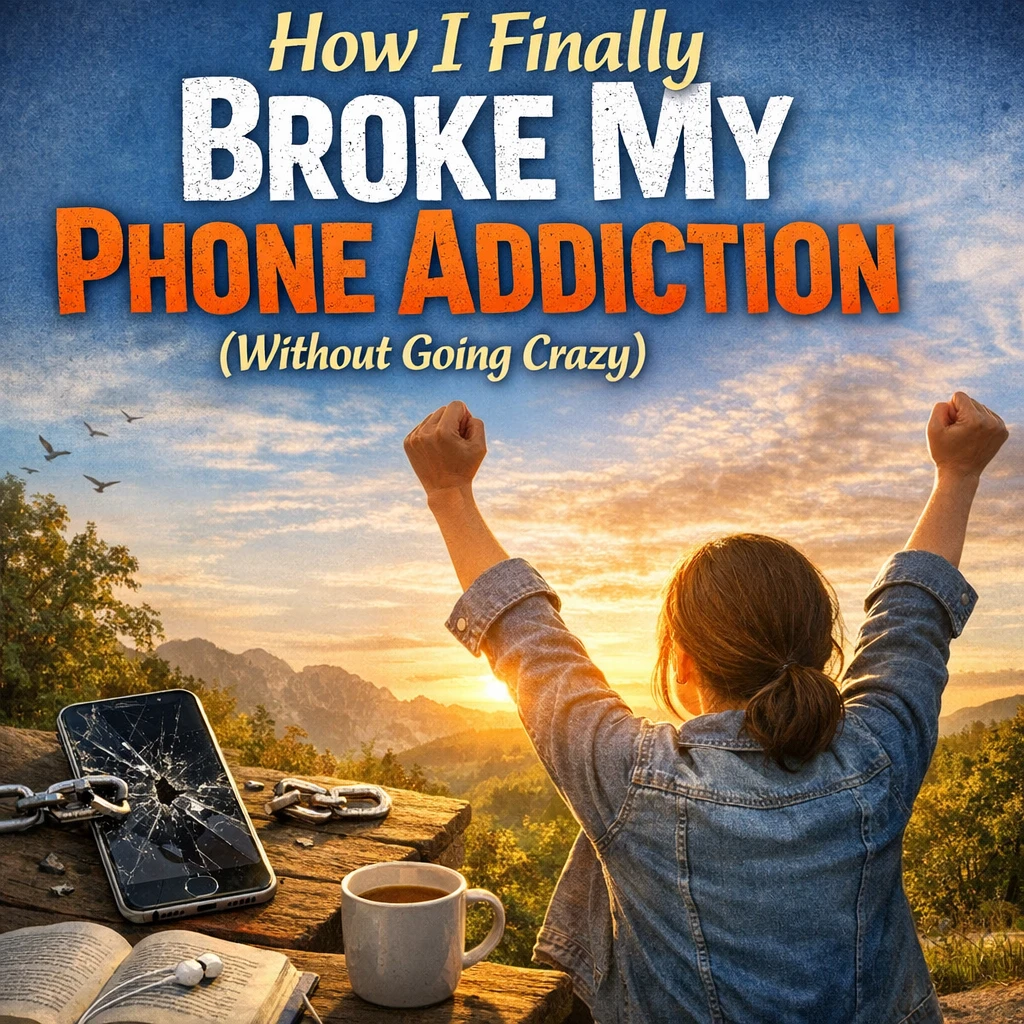
I used to wake up to my phone. Not the alarm—no, that was too gentle. Instead, my fingers would grope for the glowing rectangle before my eyes even opened. Scrolling through notifications, emails, and social media was my morning coffee, my ritual, my addiction.
Sound familiar?
If you’re reading this, you’ve probably felt the same pull—the itch to check your phone even when you don’t need to, the hours lost to mindless scrolling, the guilt that follows. I was there too. But after years of battling my screen-time stats, I finally broke free. And no, I didn’t throw my phone into the ocean or move to a cabin in the woods.
Here’s how I did it—without losing my sanity.
Step 1: I Admitted I Had a Problem (Yes, Really)
Denial is the first obstacle. I’d tell myself, “I’m just staying connected” or “It’s just a quick check.” But when I tallied up my screen time—5+ hours a day—I couldn’t ignore it anymore.
Action Step:
- Check your screen-time report (Settings > Screen Time on iPhone, Digital Wellbeing on Android).
- Write down how much of that time was mindless versus necessary.
Seeing the numbers shocked me into action.
Step 2: I Made My Phone Less Appealing
Phones are designed to be addictive. Bright colors, endless notifications, infinite scroll—they hijack our brains. So, I fought back.
What Worked:
- Grayscale Mode: Switching my display to black-and-white made apps look boring. (Settings > Accessibility > Display & Text Size > Color Filters.)
- Notification Purge: I turned off all non-essential alerts. No buzzes for likes, emails, or random app updates.
- App Jail: I moved social media to the last home screen and buried it in folders. Out of sight, out of mind.
Step 3: I Replaced Scrolling with Intentional Habits
Addiction thrives in empty moments—waiting in line, sitting on the couch, lying in bed. I filled those gaps with better habits.
My Replacements:
- Carrying a book: Even just a few pages beat Instagram doomscrolling.
- Journaling: Instead of venting online, I scribbled thoughts in a notebook.
- Actual conversations: I started calling friends instead of just liking their posts.
Step 4: I Set Boundaries (And Stuck to Them)
Rules without enforcement are just suggestions. I created non-negotiable phone-free zones:
- No phone in bed. Charged it across the room instead.
- No phone at meals. Even solo lunches became screen-free.
- No phone for the first hour of the day. I drank coffee, stretched, and thought instead.
At first, it felt like withdrawal. But after two weeks, my brain adjusted.
Step 5: I Found Joy in Real Life Again
Here’s the magic: the less I used my phone, the more I noticed life. I remembered how to be bored (a superpower!), had deeper conversations, and even picked up old hobbies.
Unexpected Wins:
- My attention span improved.
- I slept better without blue light.
- I stopped comparing my life to curated highlight reels.
The Bottom Line
Breaking phone addiction isn’t about hating technology—it’s about reclaiming your attention. You don’t have to go cold turkey or live like a monk. Small, intentional changes add up.
If I could do it, so can you. Start today. Your brain (and your future self) will thank you.
What’s your first step going to be? Drop a comment or share your own tips below! 🚀