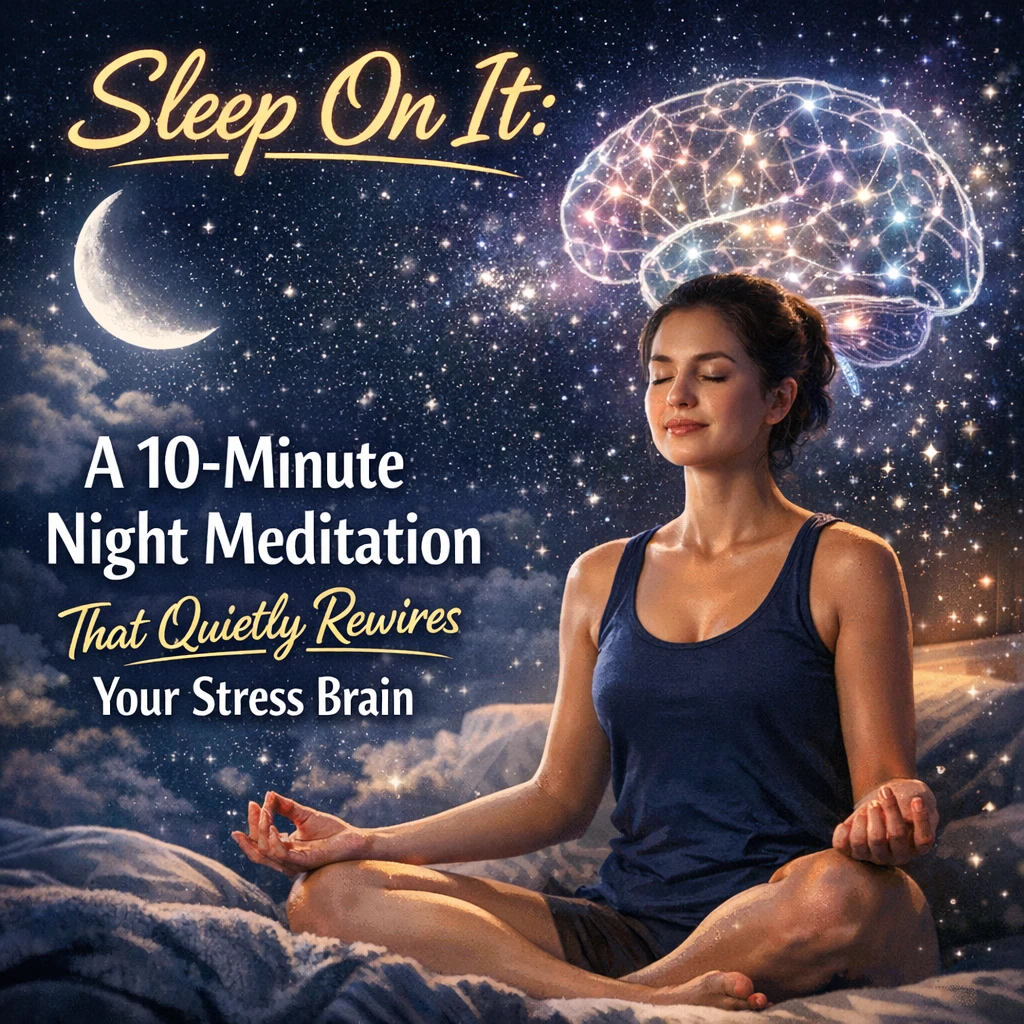
We’ve all been there—lying in bed, eyes wide open, as the weight of the day presses down like an invisible hand. Stress has a way of hijacking our nights, turning rest into restless tossing. But what if just 10 minutes could quiet the storm? A simple night meditation practice might be the gentle reset your brain craves.
The Science of Stress and Sleep
Stress doesn’t just live in your mind; it rewires your brain. Chronic stress keeps the body in fight-or-flight mode, flooding your system with cortisol, the hormone that tells you danger is near. Over time, this can disrupt sleep, impair memory, and even weaken immunity.
Here’s the good news: meditation acts like a soft counterbalance. Studies show that regular mindfulness practices can shrink the amygdala (the brain’s fear center) while strengthening the prefrontal cortex (the rational, calm-thinking region). In short, meditation helps your brain swap panic for peace—especially when done before sleep.
The 10-Minute Night Meditation Routine
This practice is designed to be effortless, inviting your body and mind to unwind without pressure. No special skills are required—just a quiet space and your breath.
Step 1: Prepare Your Space (2 Minutes)
- Dim the lights or turn them off entirely.
- Lie down in bed or sit comfortably, loosening any tight clothing.
- Set a soft alarm for 10 minutes if you’re worried about falling asleep (though drifting off is perfectly fine!).
Step 2: The Body Scan (3 Minutes)
Close your eyes and take three deep breaths. Then, mentally scan your body from head to toe:
- Notice areas of tension (jaw, shoulders, hips).
- Imagine each inhale softening those spots, each exhale releasing stiffness.
- Don’t judge or force relaxation—just observe.
Step 3: Anchor to Your Breath (3 Minutes)
- Focus on the natural rhythm of your breathing. Feel the air entering and leaving your nostrils or the rise and fall of your chest.
- When thoughts intrude (and they will), gently return to your breath. No scolding, no frustration—just redirection.
Step 4: Gratitude or Mantra (2 Minutes)
- Silently repeat a calming phrase like “I am safe” or “Let go.”
- Alternatively, name three small things you’re grateful for from the day—a warm blanket, a kind gesture, the silence of night.
Step 5: Drift Off (Let Go)
Release all effort. Whether you fall asleep or simply rest in stillness, trust that your nervous system is already unwinding.
Why Night Meditation Works
Unlike daytime practices, nighttime meditation leverages your body’s natural wind-down cycle. As melatonin rises, your brain becomes more receptive to relaxation cues. This 10-minute ritual:
- Slows racing thoughts by giving your mind a single point of focus.
- Activates the parasympathetic nervous system, signaling safety and rest.
- Creates a buffer between the chaos of the day and the sanctuary of sleep.
The Long-Term Rewiring Effect
Commit to this practice for just a few weeks, and you might notice subtle shifts:
- Falling asleep becomes easier as your brain associates bedtime with calm.
- Morning anxiety lessens because stress hasn’t been left to ferment overnight.
- Emotional resilience grows—you’ll catch stressors earlier, before they spiral.
A Gentle Reminder
There’s no “perfect” meditation. Some nights, your mind will chatter; other nights, you’ll drop into deep stillness instantly. Both are okay. The magic lies in showing up, not in achieving a particular state.
So tonight, before you surrender to sleep, gift yourself these 10 minutes. Your stressed brain—and your tomorrow self—will thank you.