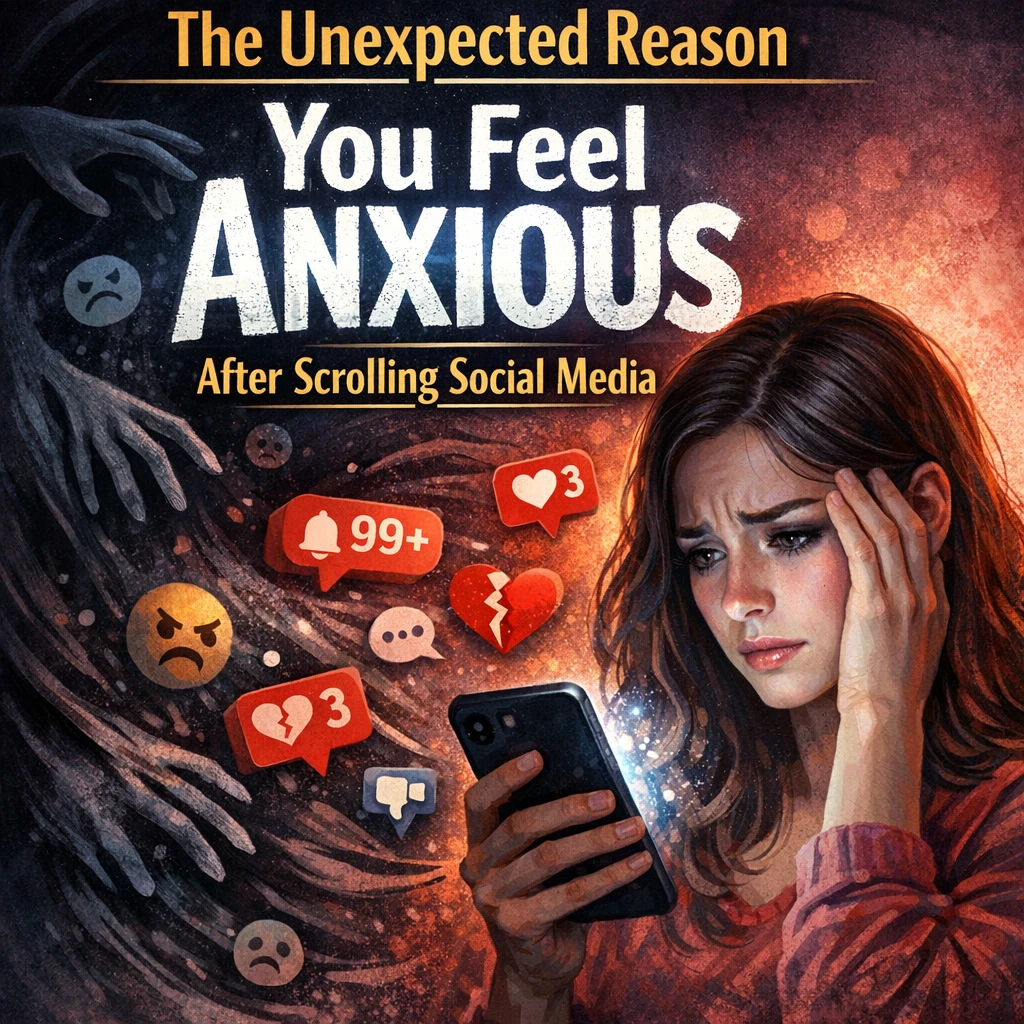
You’ve just spent an hour scrolling through your feed, catching up on posts, memes, and updates from friends. At first, it felt relaxing—even entertaining. But now, a quiet unease settles in. Your chest feels tight, your thoughts race, and you can’t shake the lingering sense of dissatisfaction. Sound familiar?
This post-digital anxiety isn’t just about wasted time or comparison fatigue. There’s a deeper, often overlooked reason behind it—one rooted in neuroscience and human psychology.
The Hidden Culprit: Your Brain’s Reward System
Social media platforms are designed to exploit a primal part of your brain: the dopamine-driven reward system. Every like, comment, or notification triggers a tiny burst of dopamine, the neurotransmitter associated with pleasure and motivation. Over time, this creates a cycle of craving and reward—similar to gambling or snacking on junk food.
But here’s the twist: dopamine isn’t just about pleasure—it’s about anticipation. The unpredictability of social media (Will your post get likes? Who messaged you?) keeps your brain in a state of heightened alert. When the stimulation stops, your brain crashes from this hyper-aroused state, leaving you feeling drained and anxious.
The Comparison Trap: A Silent Stressor
While envy or insecurity from curated highlight reels plays a role, another subtle mechanism amplifies your anxiety: social surveillance mode. Scrolling activates your brain’s "social monitoring" instincts, a leftover from our evolutionary need to assess threats and hierarchies in groups.
Even if you’re not consciously comparing yourself, your subconscious is tallying up perceived social standings, triggering low-grade stress. This constant mental tallying—often unnoticed—leaves you feeling unsettled long after you’ve closed the app.
The Overstimulation Paradox
Social media floods your brain with fragmented information—quick videos, rapid-fire updates, and endless scrolling. This overwhelms your working memory, the mental "notepad" that helps you process and prioritize tasks.
When your working memory is overloaded, your brain struggles to transition back to slower, real-world tasks. The result? A foggy, restless feeling—like mental whiplash—that fuels anxiety.
How to Break the Cycle
- Batch Your Scrolling: Designate specific times for social media instead of checking intermittently. This reduces the dopamine rollercoaster.
- Curate Your Feed: Unfollow accounts that trigger stress, even subtly. Your brain picks up on negative cues faster than you realize.
- Practice Post-Scrolling Grounding: After using social media, take 60 seconds to breathe deeply or focus on a physical object. This helps reset your nervous system.
- Embrace "JOMO" (Joy of Missing Out): Remind yourself that disconnecting isn’t deprivation—it’s reclaiming mental clarity.
The Bigger Picture
Anxiety after scrolling isn’t a personal failing—it’s a natural response to an unnatural stimulus. By understanding the mechanisms at play, you can reshape your relationship with social media, not through rigid restriction, but through mindful awareness.
The next time you feel that post-scroll unease, pause and ask: Is this my anxiety, or my brain signaling it’s had enough? The answer might surprise you.