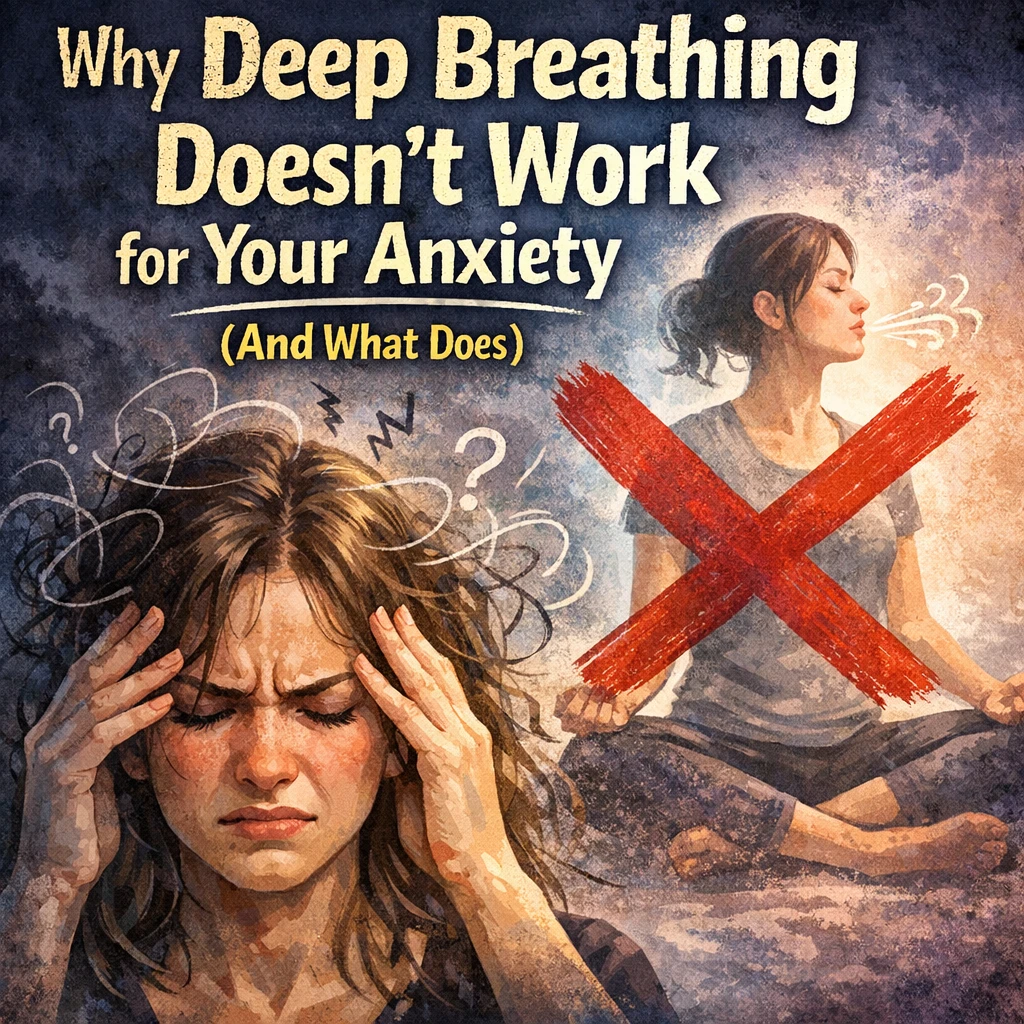
For years, you’ve been told to "just breathe deeply" when anxiety strikes. But what if the go-to advice doesn’t work for you? You’re not alone. While deep breathing can be helpful for some, it often falls short for others—and there’s science behind why. Let’s explore why this common technique might not be your golden ticket to calm and what you can try instead.
The Problem With Deep Breathing
Deep breathing exercises—like diaphragmatic breathing or the 4-7-8 method—are rooted in the idea that slowing your breath can activate the parasympathetic nervous system, which counteracts the body’s stress response. But here’s the catch:
-
It Can Feel Forced
For many, focusing intently on breathwork can heighten self-awareness, making anxiety worse. If you’re already overthinking, trying to "control" your breath may add another layer of stress. -
It Doesn’t Address the Root Cause
Anxiety isn’t just about physical symptoms; it’s often tied to thoughts, emotions, and past experiences. Deep breathing alone doesn’t resolve the underlying triggers. -
It Can Trigger Hyperventilation
Ironically, some people unintentionally hyperventilate when attempting deep breathing, which can mimic panic attack symptoms like dizziness or tingling.
What Actually Works for Anxiety?
If deep breathing isn’t your solution, don’t despair. Here are evidence-based alternatives that may work better for you:
1. Grounding Techniques
When anxiety spirals, grounding pulls you back to the present. Try the 5-4-3-2-1 method:
- Name 5 things you see.
- 4 things you can touch.
- 3 things you hear.
- 2 things you smell.
- 1 thing you taste.
This engages your senses and disrupts anxious thought loops.
2. Progressive Muscle Relaxation (PMR)
Anxiety often manifests as physical tension. PMR involves systematically tensing and releasing muscle groups, teaching your body the difference between tension and relaxation.
3. Cognitive Reframing
Challenge anxious thoughts by asking:
- Is this thought realistic?
- What’s the evidence for/against it?
- What would I tell a friend in this situation?
Reframing helps break the cycle of catastrophic thinking.
4. Movement-Based Strategies
Physical activity—whether walking, stretching, or dancing—releases endorphins and reduces cortisol. Unlike deep breathing, movement can feel more natural and distracting.
5. Mindfulness Without the Breath
If breath-focused meditation overwhelms you, try:
- Body scans: Slowly noticing sensations from head to toe.
- Visualization: Imagining a safe, peaceful place.
- Sound-based focus: Listening to ambient noise or music.
Why Personalized Anxiety Tools Matter
Anxiety isn’t one-size-fits-all. What works for someone else might not work for you—and that’s okay. The key is experimentation:
- Track your triggers: Notice when and why anxiety peaks.
- Mix and match techniques: Combine grounding with movement or PMR with reframing.
- Be patient: New strategies take practice.
Final Thoughts
Deep breathing isn’t a failure if it doesn’t help you; it’s just not the right tool for your anxiety. By exploring other methods—grounding, muscle relaxation, cognitive reframing, movement, or alternative mindfulness—you can find what truly brings you relief.
Anxiety is a complex puzzle, but with curiosity and self-compassion, you’ll discover the pieces that fit for you.