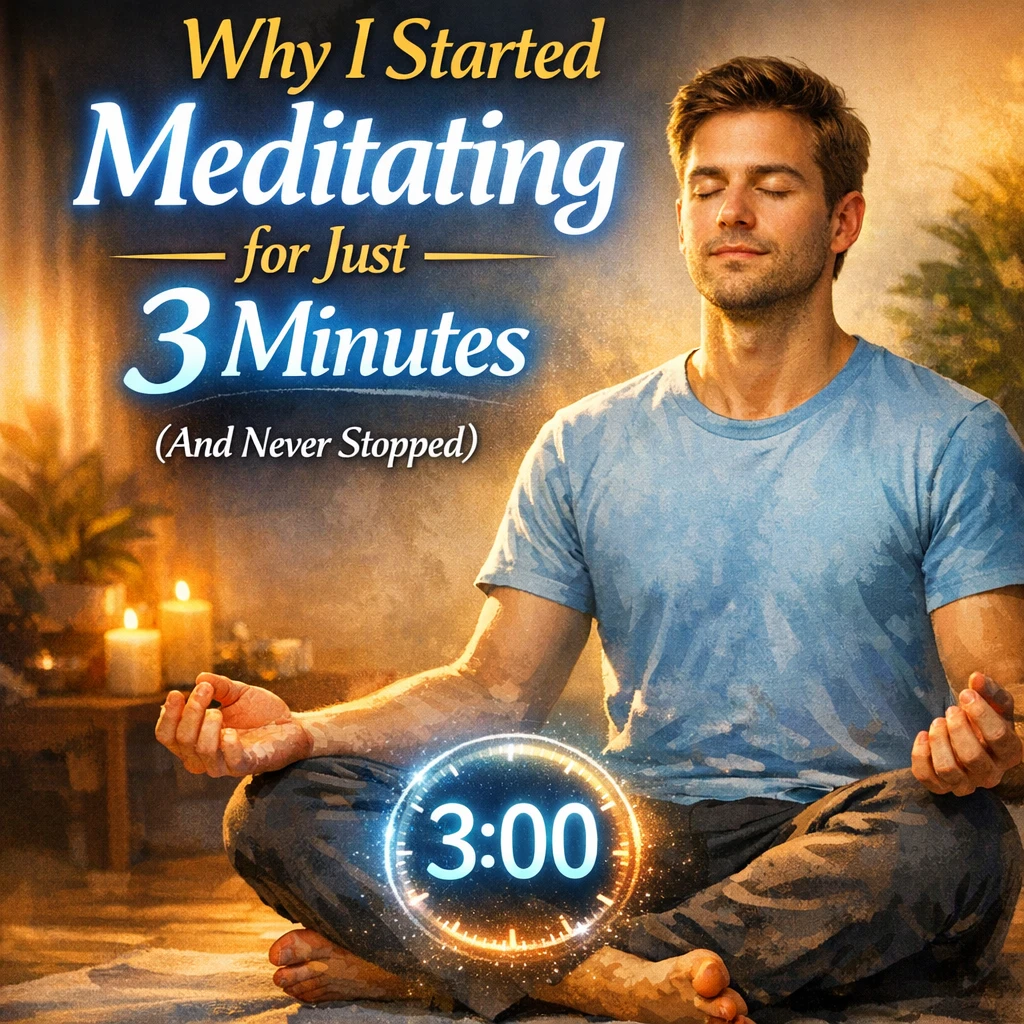
"I don’t have time to meditate."
That was my mantra for years—ironic, given that I was rejecting meditation while reciting a mantra of my own. Like so many others, I dismissed mindfulness as something for yogis or Silicon Valley CEOs, not for someone juggling work, family, and the relentless buzz of modern life. Then, one chaotic morning, I stumbled upon the idea of micro-meditation—just three minutes a day. What happened next changed everything.
The Breaking Point: Why 3 Minutes?
It was a Tuesday. My inbox was a disaster, my toddler was refusing to wear pants, and I’d burned my toast. Again. As I stood in the kitchen, frazzled and frustrated, I remembered a podcast snippet about the power of ultra-short meditation.
The premise was simple:
- No fancy cushions.
- No 30-minute sessions.
- Just three minutes of focused breathing.
Skeptical but desperate, I set a timer on my phone, closed my eyes, and… waited for enlightenment. It didn’t come. But something else did.
What Happened in Those 3 Minutes?
-
The First Minute: Resistance
My brain fought back. "This is pointless. You have emails to answer!" I noticed my jaw was clenched, my shoulders tight. -
The Second Minute: Awareness
I focused on my breath—inhale, exhale. Thoughts still raced, but I began to observe them like clouds passing. No judgment, just noticing. -
The Third Minute: Shift
A quiet space opened. The chaos didn’t disappear, but my reaction to it softened. I felt… lighter.
When the timer chimed, I opened my eyes. The same chaos awaited, but I was different.
The Science Behind Micro-Meditation
Why does such a short practice work? Research backs it up:
- Neuroplasticity: Even brief meditation can rewire stress responses (Harvard Medical School, 2018).
- The "Pause Button" Effect: Three minutes interrupts the autopilot of anxiety, creating mental space (UC Berkeley Greater Good Science Center).
- Habit Formation: Tiny actions are more sustainable. Three minutes felt doable—no guilt, no pressure.
How I Made It Stick (And Why I Never Stopped)
1. Anchored to a Habit
I paired meditation with my morning coffee. No extra time needed—just three mindful sips.
2. Embracing Imperfection
Some days, my mind was a tornado. That was okay. The goal wasn’t emptiness; it was awareness.
3. The Ripple Effect
Three minutes grew into five, then ten—not by force, but because I wanted to. The benefits spilled over:
- Better focus at work.
- Less reactive parenting.
- A subtle joy in ordinary moments.
Try It Yourself: A 3-Minute Meditation Guide
-
Set a Timer
Use your phone or a kitchen timer. Three minutes. No cheating. -
Sit Comfortably
Chair, floor, bed—just keep your spine straight. -
Focus on Your Breath
Inhale deeply through your nose, exhale slowly. When thoughts arise (they will!), gently return to your breath. -
Notice, Don’t Judge
If your mind wanders, that’s normal. The magic is in the returning.
The Unexpected Gift
Meditation didn’t solve my problems. But it changed how I met them. Three minutes taught me that transformation doesn’t require hours—just a willingness to pause.
Now, when life feels overwhelming, I hear my inner voice whisper: "You have three minutes." And that, it turns out, is enough.
Your turn. Set a timer. Breathe. See what happens.
Have you tried micro-meditation? Share your experience in the comments!
Enjoyed this post? Subscribe for more mindful living tips delivered to your inbox.