By [Your Name]
The Dream of Creating a Game
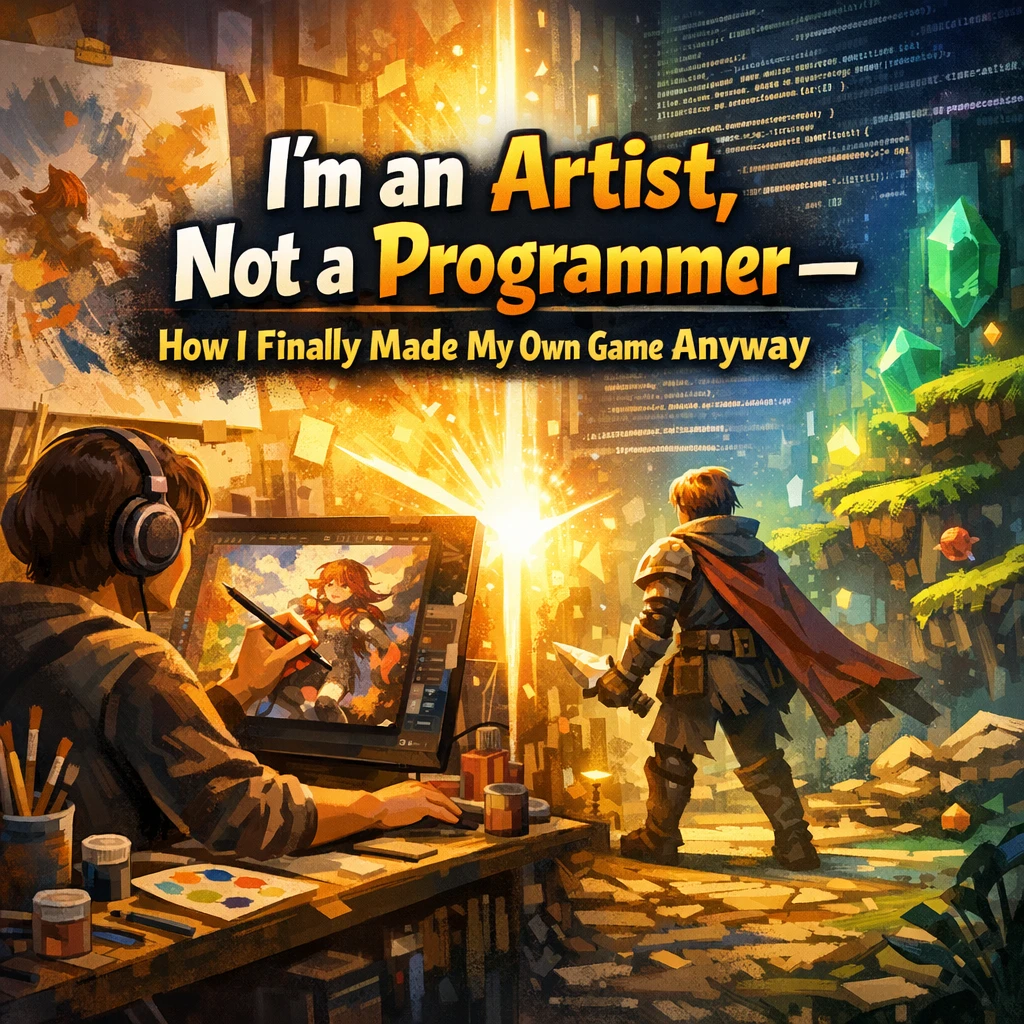
For years, I dreamed of making my own game. As an artist, I had notebooks filled with character designs, vibrant worlds, and storylines begging to be brought to life. But there was one problem: I wasn’t a programmer. The thought of writing code felt like trying to decipher an alien language. Yet, despite the intimidation, I refused to let that stop me.
This is the story of how I—an artist with zero coding experience—finally made my own game.
Overcoming the Mental Block
The Myth of the "Solo Developer"
I used to believe that game development required mastery of every discipline: art, programming, sound design, and more. But the truth is, many successful games are made by small teams or even solo creators who leverage the right tools and workflows.
Key Realization: You don’t need to be an expert in everything. You just need to find a way to bridge the gap between your skills and your vision.
Starting Small
My first mistake was aiming too big. I wanted to create an open-world RPG with intricate mechanics—a project far beyond my capabilities. Instead, I scaled back to a simple 2D platformer.
Tip: Begin with a tiny, achievable prototype. Even a basic game teaches you invaluable lessons.
Tools That Empowered Me (Without Coding)
Visual Scripting
I discovered that many game engines offer visual scripting systems. These allow you to create game logic using drag-and-drop nodes instead of writing code. It felt like building with digital LEGO blocks—intuitive and forgiving.
Why It Worked for Me:
- No syntax errors to debug.
- Visual feedback made it easier to understand cause and effect.
Asset Stores and Templates
Since I was already comfortable with art, I focused on creating assets while using pre-made templates for things like UI, physics, and basic interactions.
Advice: Don’t reinvent the wheel. Use existing resources to fill gaps in your knowledge.
The Power of Community
Learning from Others
I joined online forums and communities where developers shared tips and tutorials. Watching others solve problems demystified the process and gave me confidence.
Pro Tip: Look for tutorials tailored to artists or beginners. Many assume no prior coding knowledge.
Collaborating with Others
I eventually connected with a programmer who loved my art style. We teamed up for a short game jam, and the experience was transformative.
Lesson Learned: Collaboration can complement your strengths. You don’t have to do it all alone.
The Joy of Finishing Something
After months of trial and error, I released my first game. It wasn’t perfect, but it was mine. The sense of accomplishment was overwhelming.
Final Thoughts:
- Progress Over Perfection: Your first game doesn’t need to be a masterpiece.
- Embrace the Learning Curve: Every mistake is a step forward.
- Trust Your Creativity: As an artist, you bring a unique perspective to game design.
You Can Do It Too
If you’re an artist hesitating to dive into game development, take the leap. Start small, lean on tools that simplify the process, and don’t be afraid to ask for help.
Remember: you don’t need to be a programmer to make a game. You just need the courage to begin.
Have you made a game as an artist? Share your story in the comments!
[Your Name] is an artist and indie game developer passionate about helping others bring their creative visions to life.