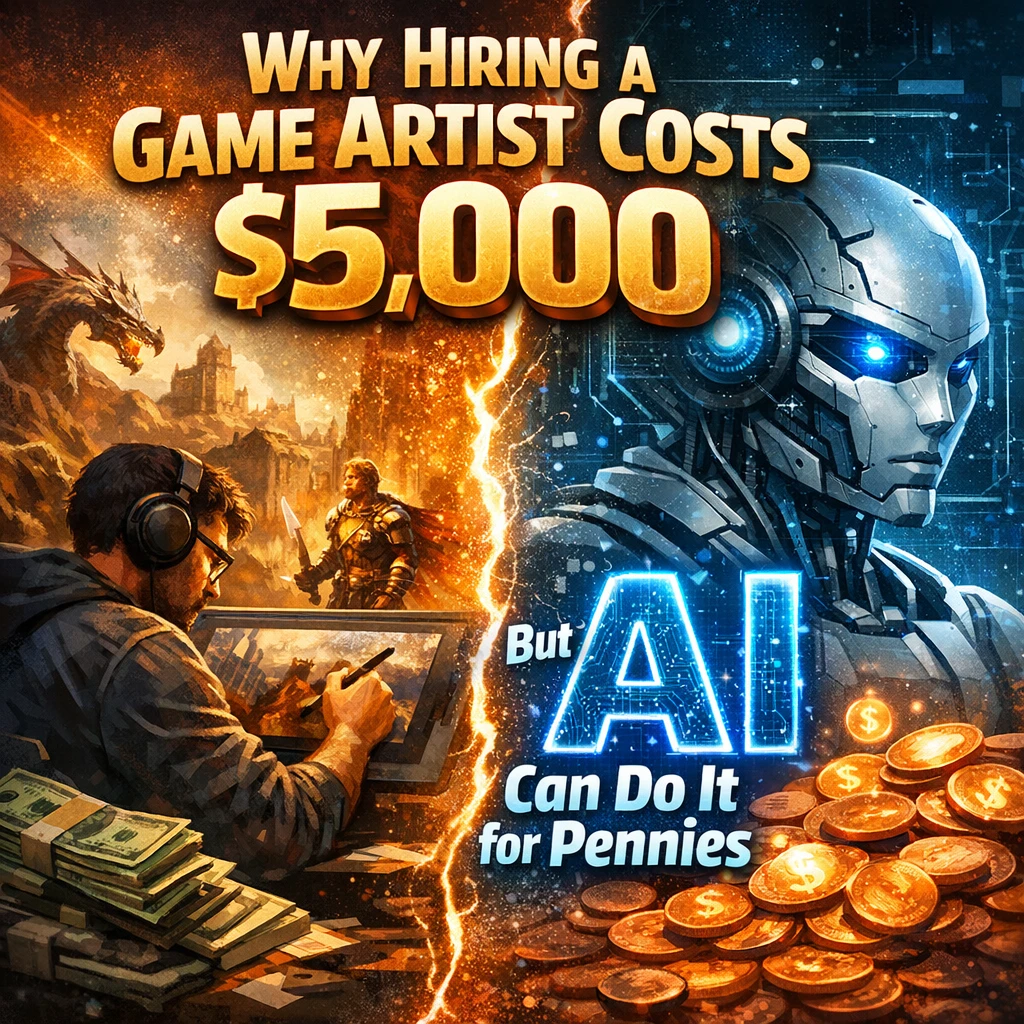
The gaming industry is booming, and with it, the demand for high-quality art has skyrocketed. Traditionally, hiring a skilled game artist could set you back thousands of dollars—sometimes $5,000 or more for a single project. But now, AI-powered tools are changing the game, offering comparable results for a fraction of the cost. How is this possible? Let’s dive into the economics, the trade-offs, and what this means for game developers.
The High Cost of Human Game Artists
Game art isn’t just about drawing pretty pictures—it’s a complex, time-consuming process that requires specialized skills. Here’s why hiring a human artist can be so expensive:
1. Specialized Expertise
Game artists need a deep understanding of:
- Character design
- Environment art
- Animation principles
- Technical constraints (e.g., polygon counts, UV mapping)
This expertise takes years to develop, and professionals rightly charge premium rates for their work.
2. Time-Intensive Workflows
Creating a single character or environment can take weeks or even months. Every detail—from concept sketches to final polish—requires meticulous attention.
3. Revisions and Iterations
Game development is iterative. Artists often go through multiple rounds of feedback, adding to the time and cost.
4. Overhead Costs
Freelancers and studios factor in software licenses, hardware, and other business expenses, which get passed on to clients.
How AI Disrupts the Cost Structure
AI-powered tools can generate game art in minutes, not months, and at a tiny fraction of the cost. Here’s how:
1. Speed and Scalability
AI can produce hundreds of variations in the time it takes a human to sketch one. Need a dragon, a spaceship, or a medieval castle? AI can generate it instantly.
2. Lower Barrier to Entry
You don’t need to hire a full-time artist or outsource to a studio. AI tools allow solo developers and small teams to create professional-grade art without breaking the bank.
3. Automated Iterations
AI can quickly adjust colors, styles, or proportions based on feedback, reducing the back-and-forth typically required with human artists.
4. Cost Efficiency
While hiring an artist might cost $5,000, an AI tool could generate similar assets for pennies per iteration.
The Trade-Offs: AI vs. Human Artists
AI isn’t a perfect replacement—yet. Here’s where human artists still shine:
1. Creativity and Originality
AI generates art based on existing data, which can lead to generic or derivative results. Human artists bring unique vision and storytelling to their work.
2. Emotional Depth
Subtle expressions, nuanced animations, and artistic flair are harder for AI to replicate convincingly.
3. Customization
AI can struggle with highly specific or unconventional requests that require deep creative problem-solving.
4. Ethical Considerations
Some AI tools are trained on copyrighted artwork, raising questions about originality and fair use.
The Future of Game Art: A Hybrid Approach
The smartest strategy? Combine the best of both worlds:
- Use AI for rapid prototyping, background assets, or repetitive tasks.
- Hire human artists for key characters, cutscenes, and emotionally impactful designs.
This way, you save money without sacrificing quality.
Final Thoughts
AI is revolutionizing game art, making it faster and cheaper than ever. But while AI can handle a lot, it’s not a complete replacement for human creativity—at least not yet. For indie developers and studios on a budget, AI offers an incredible opportunity to cut costs without compromising too much on quality.
The choice isn’t between AI or humans—it’s about using the right tool for the right job. And with AI in the mix, game development just got a whole lot more accessible.