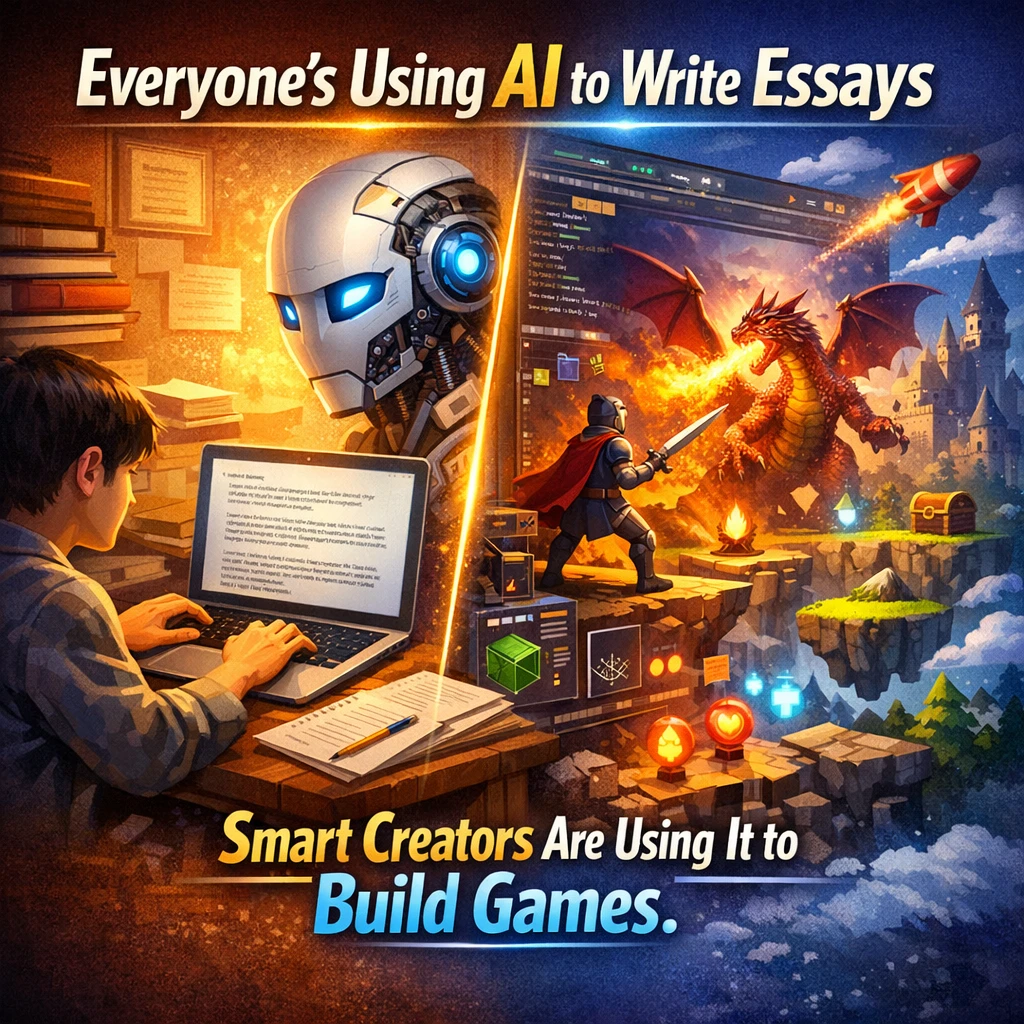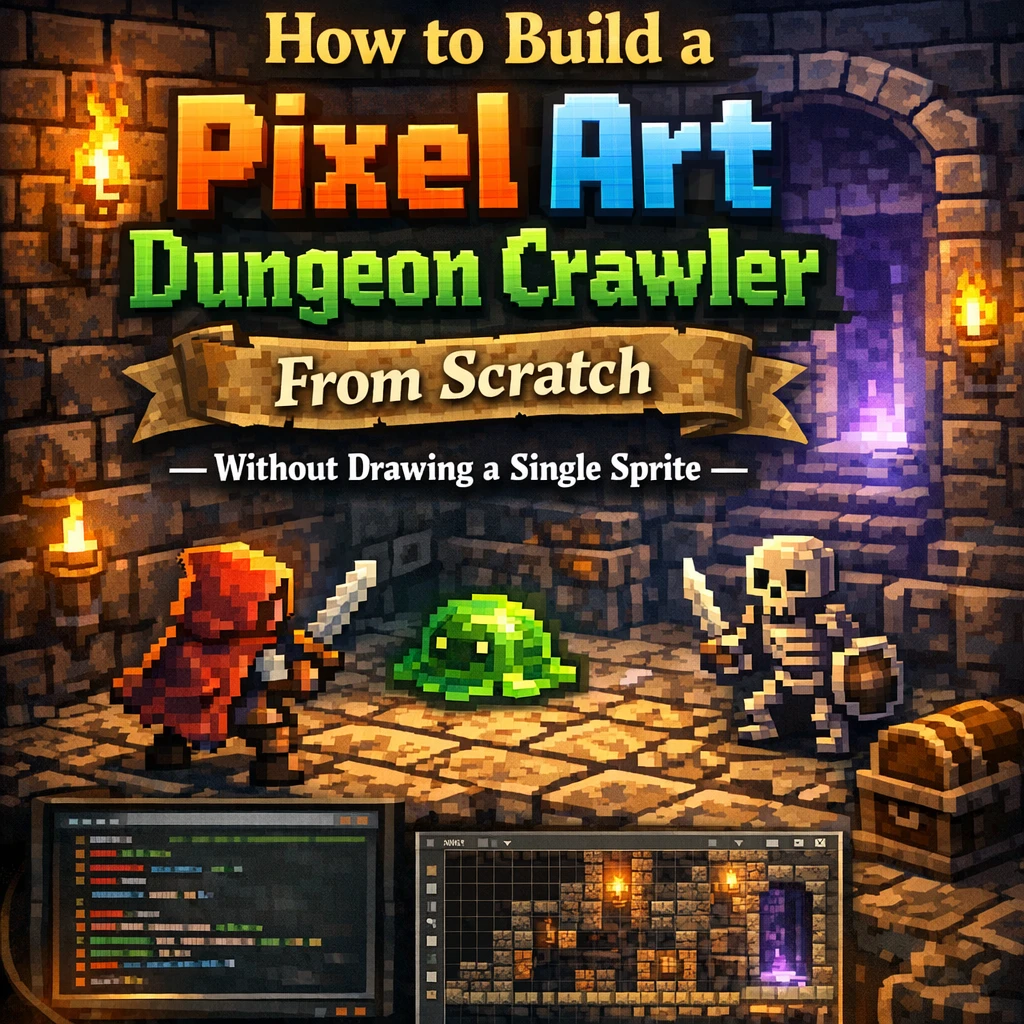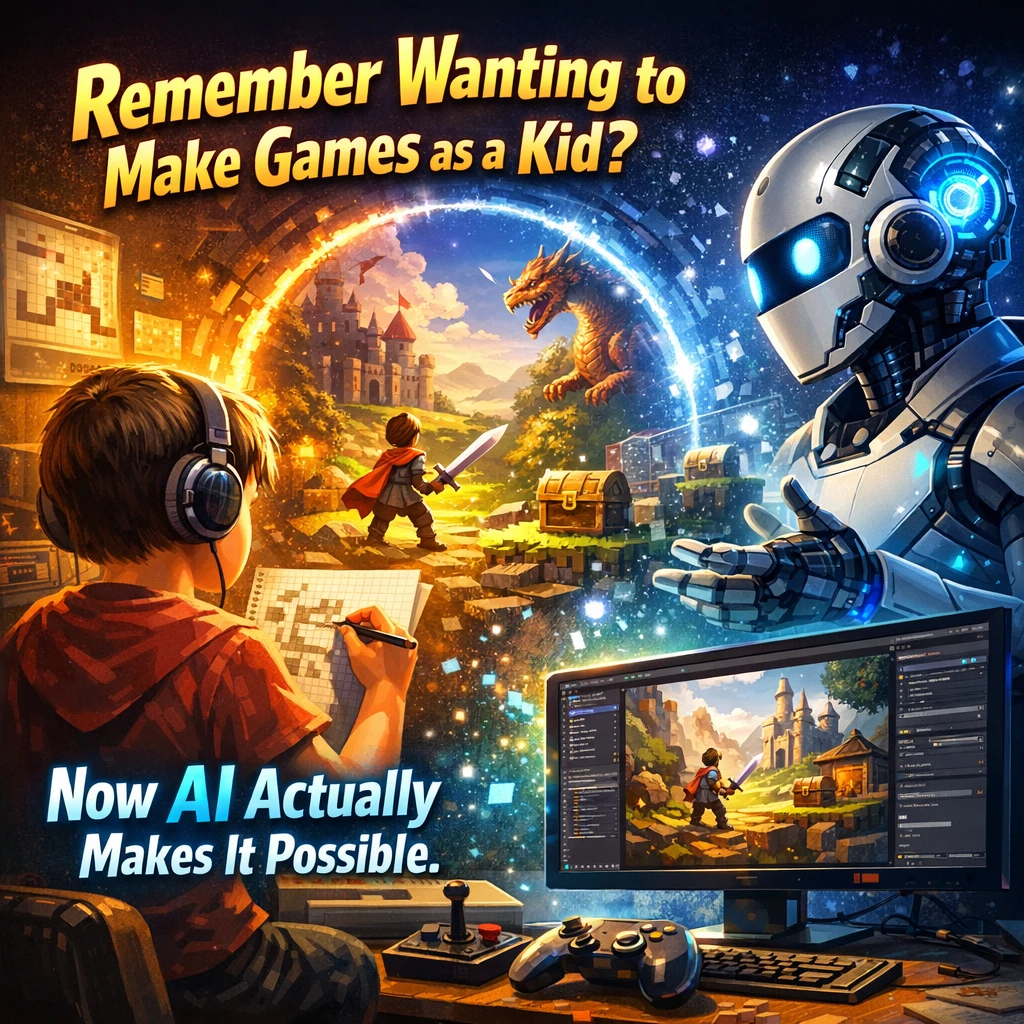
Every great game starts with a spark—an idea that lingers in your mind, begging to be brought to life. But too often, that idea stays trapped in notebooks or late-night conversations because the path to creation feels daunting. What if you could turn that vision into a playable prototype tonight? With the rise of AI tools, that’s no longer a fantasy. Your game idea is worth far more than you think, and AI can be the catalyst to unlock its potential.
Why Your Game Idea Deserves to Exist
Game ideas are often dismissed as "just ideas," but they’re the foundation of every legendary title. The difference between a forgotten concept and a celebrated game isn’t just talent or budget—it’s execution. Historically, bringing a game to life required coding expertise, artistic skills, and months (or years) of labor. Now, AI can bridge the gap between imagination and reality, empowering you to:
- Prototype faster: Test mechanics and gameplay loops in hours, not months.
- Generate assets: Create placeholder art, sound effects, or even music to flesh out your vision.
- Write dialogue and lore: Craft compelling narratives without staring at a blank page.
- Debug and iterate: Use AI-assisted tools to identify and fix issues in your code.
The barrier to entry has never been lower.
How AI Accelerates Game Development
1. From Concept to Playable Demo in One Night
AI can help you generate basic code snippets, design levels, or even simulate player behavior. Start small:
- Describe your core mechanic to an AI assistant and ask for pseudocode or simple scripts.
- Use procedural generation tools to create randomized maps or dungeons.
- Train a model on your favorite games to suggest balancing tweaks for your design.
2. Art and Audio Without a Team
You don’t need to be an artist to visualize your game. AI can:
- Generate 2D sprites or 3D models based on text prompts.
- Create ambient soundscapes or retro-style chiptunes.
- Upscale placeholder assets to near-final quality.
3. Writing and Worldbuilding on Demand
Stuck on lore or character dialogue? AI can:
- Draft branching dialogue trees for RPGs.
- Generate quest ideas or faction backstories.
- Help refine your game’s tone and pacing.
The Mindset Shift: AI as a Collaborator
AI isn’t here to replace creativity—it’s here to amplify it. Think of it as a tireless intern:
- It can handle repetitive tasks, freeing you to focus on big-picture design.
- It offers instant feedback, helping you iterate rapidly.
- It democratizes development, letting solo creators compete with studios.
The key is to stay in the driver’s seat. Use AI to explore possibilities, but trust your instincts to curate the best ideas.
Getting Started Tonight
- Define Your Core Loop: What’s the one thing players will do most? Describe it in a sentence.
- Choose Your Tools: Pick AI tools that align with your needs (e.g., code generation, art, writing).
- Build a "Vertical Slice": Create a single polished level or mechanic to test your vision.
- Playtest Early: Share your prototype with friends and iterate based on feedback.
The Future Is Yours to Build
Your game idea has value—not just as a dream, but as a tangible experience waiting to be shared. AI won’t make the game for you, but it can turn "someday" into "tonight." The next indie hit could be yours. Why wait?
Start building. The world needs your game.